
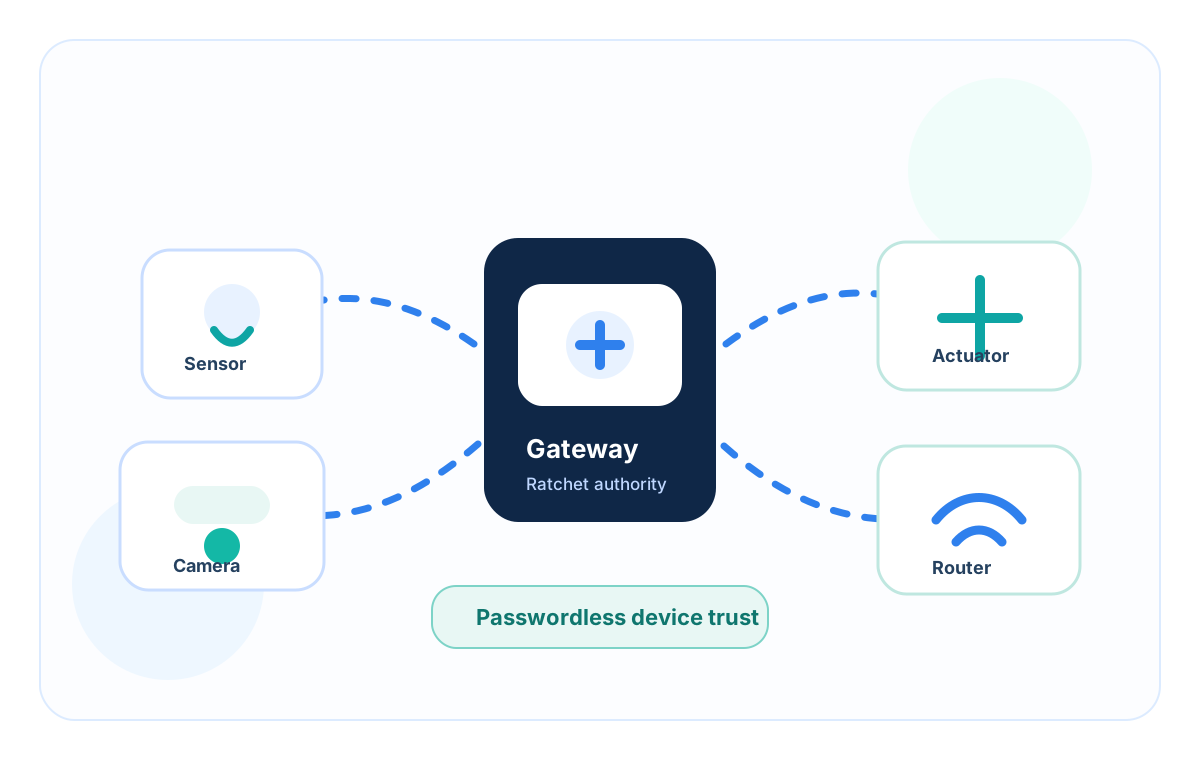
MAIA-IOT
A device authentication and secure messaging layer for IoT, edge, gateway, and peer-to-peer environments where static secrets are too fragile.
Device trust should be visible in the workflow.
MAIA-IOT turns a fragile device-to-server exchange into a measurable trust relationship. A demo can show the right device being accepted, stale traffic being rejected, and modified runtime behavior being treated as risk instead of silently trusted.
Core capabilities
MAIA-IOT positions PahiLabs as a passwordless trust company for machines, not only humans.
Per-message device trust
Every accepted message carries enough trust context for the server to decide whether to accept it.
Ratchet-based trust
Accepted messages advance state so replayed or stale traffic can be rejected.
Clone and tamper resistance
Designed to reject copied device state and ordinary runtime modification during verification.
Gateway and edge fit
Designed for practical board, gateway, and edge deployments rather than a paper-only protocol.
Why now for IoT authentication
Edge deployments are expanding faster than security teams can manually manage device secrets. MAIA-IOT turns device identity into a ratcheted, passwordless trust flow that can be demonstrated and measured.
The server makes the final trust decision before accepting device data.
The message carries verifiable context, not just a payload.
The demo story can show accepted traffic and rejected cloned, stale, or modified traffic.
MAIA-IOT extends the PahiLabs trust story from human login to machine identity.
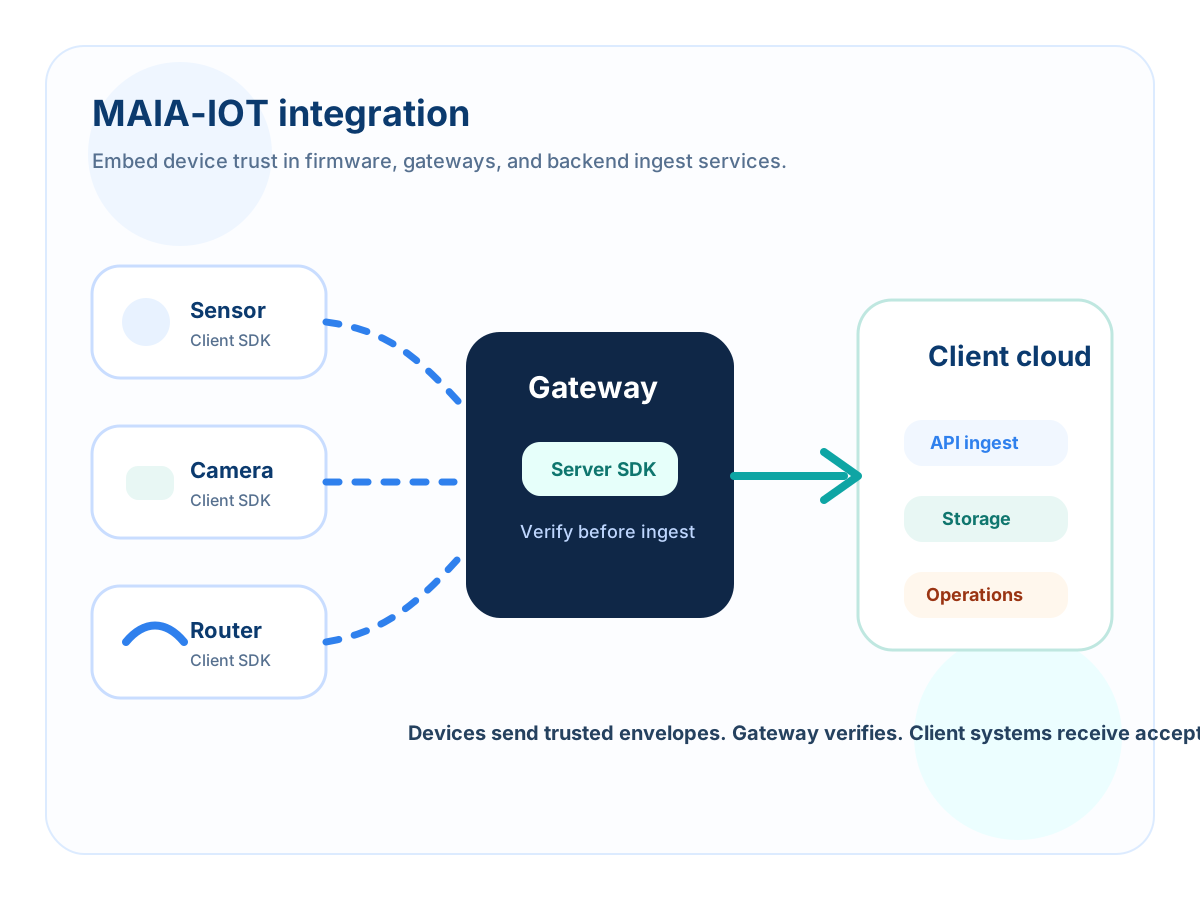
Add MAIA-IOT to devices, gateways, and ingest services.
Clients integrate MAIA-IOT where device data enters their system. The device or gateway creates authenticated traffic, the verification side checks whether it should be accepted, and existing applications only receive trusted data.
Embed the MAIA-IOT client layer into supported devices, firmware, or gateway software.
Deploy the MAIA-IOT verification layer on a gateway, edge server, or backend ingest service.
Enroll devices and bind each device to the trust state expected by the receiving system.
Accept only verified device messages into the client cloud, database, or operational workflow.
Sensor-to-gateway telemetry
Gateway-to-cloud ingest
CPE and router deployments
Industrial edge device fleets
Built to be shown on real devices, not only described.
The trust package makes MAIA-IOT easier to sell because it includes a visual deployment story, benchmark evidence, and a clear explanation of what happens when devices are accepted or rejected.
Bench-tested on multiple MicroPython-capable device classes.
Secure ingest and re-handshake behavior are documented in the trust package.
Best public positioning: product demo and pilot baseline, with stronger hardware protections planned for hostile physical access.
Choose the path that matches your role.
Request a product demo, investor briefing, or enterprise fit call with the context needed for a useful first conversation.
Product demo
See MAIA SSO, MAIA Desktop, LENS pre-click verification, MAIA-IOT, or MAIA-PQ mapped to your deployment scenario.
Investor briefing
Get the PahiLabs product architecture, patent position, technical roadmap, and commercialization story.
Enterprise fit call
Discuss SSO, LENS high-risk employee pilots, IoT device authentication, post-quantum migration, and pilot scope.